

Work Visas and Employment Green Cards in Phoenix — We Find the Path That Keeps You in Control
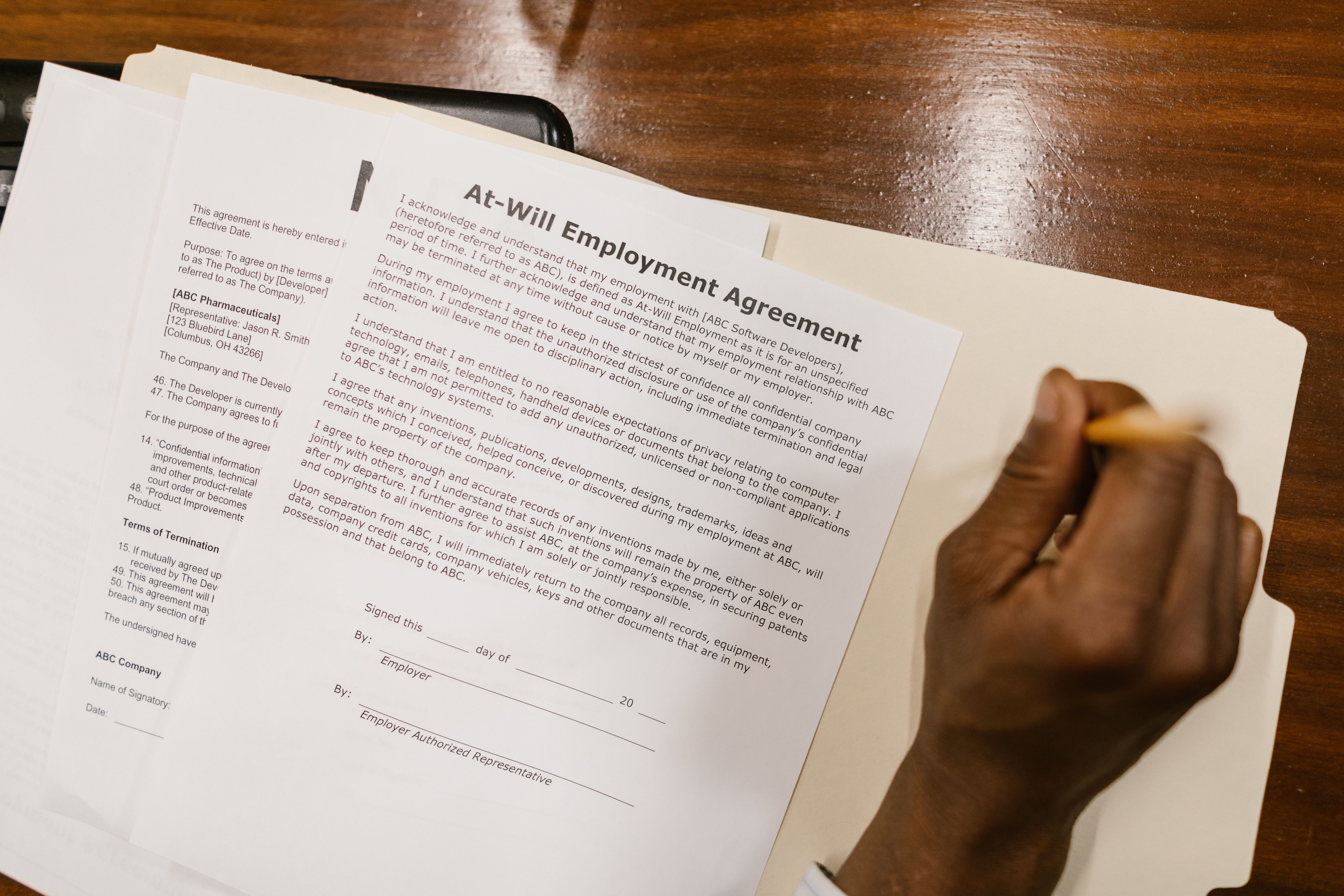
Employment-based immigration is one of the most complex areas of U.S. immigration law — and one of the most consequential. Whether you're a skilled professional navigating a visa tied to your employer, an entrepreneur building a business in the U.S., or a company sponsoring a foreign national worker, the decisions you make early in the process shape everything that follows. At ATR Law Group, we evaluate every applicable option before recommending a path — so you pursue the right category from the start.
Nonimmigrant Work Visas: The Categories We Handle
Work visas grant temporary authorization to live and work in the United States. Choosing the right visa category depends on your profession, your qualifications, your employer's situation, and your long-term goals. We represent clients across the full range of nonimmigrant employment visa categories.
- H-1B — For specialty occupation workers in fields requiring at least a bachelor's degree. We assist both employers filing petitions and employees navigating the lottery, extensions, and status maintenance.
- O-1 — For individuals with extraordinary ability or achievement in their field. The O-1 does not require employer sponsorship in the traditional sense and can be a strong alternative when H-1B options are limited.
- L-1 — For multinational company employees transferring to a U.S. office in an executive, managerial, or specialized knowledge role.
- TN — For Canadian and Mexican citizens working in qualifying professional categories under the USMCA.
- E-2 — For nationals of treaty countries investing in and directing a U.S. business.
If you're not certain which visa applies to your situation, that's exactly where we start.
EB-1: Priority Workers
The EB-1 category is reserved for individuals with extraordinary ability in their field (EB-1A), outstanding professors and researchers (EB-1B), and multinational executives and managers (EB-1C). EB-1A is notable because it allows self-petition — no employer sponsor required. If your record of achievement is strong, this can be one of the fastest paths to a green card available.
EB-2 and the National Interest Waiver
The EB-2 category covers professionals with advanced degrees and individuals with exceptional ability. Within EB-2, the National Interest Waiver (NIW) allows qualified professionals to self-petition for a green card without employer sponsorship by demonstrating that their work benefits the United States. For professionals who don't want their green card tied to a single employer's continued support, the EB-2 NIW is worth a serious look. We evaluate NIW eligibility as part of every employment-based consultation for qualifying clients.
EB-3: Skilled Workers and Professionals
The EB-3 category covers skilled workers, professionals with a bachelor's degree, and other workers. EB-3 cases typically require PERM labor certification — a process we manage on both the employer and employee side. While EB-3 timelines can be longer depending on your country of birth, it remains a viable and well-established path for many clients.
PERM Labor Certification
Most employer-sponsored green card petitions in the EB-2 and EB-3 categories require PERM labor certification through the Department of Labor before USCIS will approve the immigrant petition. We manage the PERM recruitment process, documentation requirements, and filing to keep your employer's sponsorship on track and compliant.
Your Green Card Shouldn't Depend Entirely on Your Employer
One of the most common fears we hear from employment-based clients is this: what happens if my employer pulls sponsorship before my green card goes through? It's a legitimate concern. Employer-sponsored green card cases can take years, and a layoff, a company restructuring, or a change in management can put everything at risk.
For professionals who meet the qualifications, the EB-2 National Interest Waiver offers a different model. You petition for yourself. Your case isn't contingent on your employer's continued support. And if you change jobs during the process, your petition doesn't disappear with your old employer's name on it.
We evaluate NIW eligibility — and every other applicable self-sponsorship option — as part of our initial consultation for employment-based clients. If there's a path that gives you more independence, we'll find it.
Status Maintenance Through Every Stage of the Process
Employment-based immigration cases often span years. During that time, your nonimmigrant visa status doesn't pause — it continues to require extensions, renewals, and careful timing relative to your green card application. A missed filing window or an overlooked extension can create a gap in status that affects your entire case.
We manage the full timeline: visa extensions, status maintenance, adjustment of status filing windows, and advance parole or travel document coordination when needed. Our goal is to make sure nothing lapses between where you are now and where you're going.
We Work With Both Employers and Individual Professionals
Most employment immigration firms focus on one side of the equation. We work with both.
For employers, we handle H-1B petitions, PERM labor certification, and the full employer-sponsored green card process — including compliance requirements and documentation. For individual professionals, we evaluate self-sponsorship options, manage O-1 and EB-1A petitions, and build NIW cases from the ground up.
This dual-angle approach matters most when your situation is complicated — when your employer's sponsorship is uncertain, when you're considering changing jobs mid-process, or when you qualify for more than one path and need to understand which one to pursue. We put every applicable option on the table before you file anything.
How We Approach Employment-Based Cases
Every employment immigration case we take begins with a full evaluation of your qualifications, your current status, your employer's situation (if applicable), and your long-term goals. We don't recommend a visa category or green card path until we understand the complete picture.
From there, we build a strategy — not just a filing checklist. That means identifying the right category, preparing the strongest possible petition, managing the timeline, and staying ahead of the issues that derail cases: requests for evidence, status gaps, employer changes, and priority date movement. We also keep you informed throughout the process through our client portal and direct access to our team via phone, email, and WhatsApp.
Employment-Based Immigration: Common Questions
What is the EB-2 National Interest Waiver and who qualifies?
The EB-2 NIW is a self-sponsored green card path available to professionals with advanced degrees or exceptional ability whose work benefits the United States in a significant way. Unlike most employer-sponsored green cards, the NIW does not require PERM labor certification or a specific job offer — you petition on your own behalf. Qualifying fields include STEM, medicine, education, law, business, and others. Eligibility depends on your credentials, your field, and the nature of your work's impact.Do I need an employer to sponsor my work visa or green card?
Not necessarily. Several categories allow self-petition, including the O-1 visa, the EB-1A (extraordinary ability), and the EB-2 NIW. Whether self-sponsorship is available to you depends on your qualifications and the category you're pursuing. We evaluate both employer-sponsored and self-sponsored options during every employment immigration consultation.How long does an employment-based green card take?
It depends on the category and your country of birth. EB-1 cases can move relatively quickly for nationals of most countries. EB-2 and EB-3 timelines vary significantly — nationals of India and China face long priority date backlogs that can extend the process by years. Understanding your realistic timeline before you start is one of the most important things we do in an initial consultation.What happens to my green card case if I change jobs or my employer withdraws sponsorship?
It depends on how far along your case is. In some situations, portability rules allow you to transfer an approved I-140 petition to a new employer in a similar role. In others, you may need to restart the process. If you're considering a job change while your green card is pending, talk to us before you make any moves — the timing matters.Can ATR Law Group help with H-1B visa extensions and not just initial petitions?
Yes. We handle the full H-1B lifecycle: initial cap-subject petitions, cap-exempt petitions, extensions, amendments for job changes, and the transition from H-1B status to adjustment of status when your green card priority date becomes current. We also advise on travel and maintaining valid status during the adjustment process.